Lisa Hendrix

Myth. Magic. And the power of love.

Archive for the ‘Locations: Immortal Outlaw’ Category

Hokenall

Posted by Lisa Hendrix on January 23, 2010
Posted under Locations: Immortal Outlaw

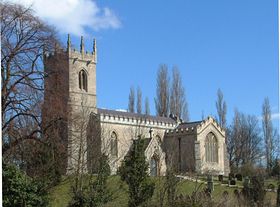
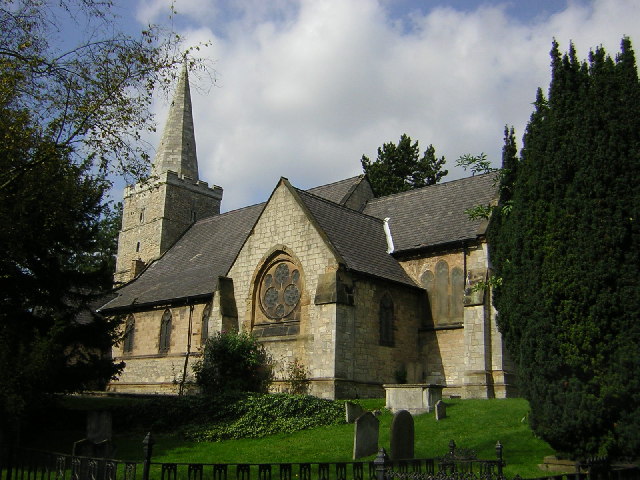
Hokenall, the village where Marian finds her old friend Nichola de Markham, lies in the Leen Valley about seven miles Northwest of Nottingham City. It’s an ancient settlement, with a church built to St. Mary Magdalene in the Saxon era (added to in late 12th century, restored 1874), and at the time of Steinarr and Marian’s visit would have been home to perhaps 2-300 people.

Today the town of about 30,000 is a bedroom community for Nottingham known simply as Hucknall, but from 1295 to 1919, it was called Hucknall Torkard, after a family of wealthy landowners in the area. The first of the family, Geoffrey Torcard (or Gaufr Torcaz, late 12th c) was a patron of nearby Newstead Abbey and gave the monks 120 acres of land from his holdings. Ties remained strong between village and abbey through the centuries until the dissolution.

Unfortunately, even with the obsessive record-preservation habits of the Brits, documents mentioning the Torcards of Hokenall are thin and dribble off to nothing just after 1300, so I got to make up Lord Peter and Lady Nichola from whole cloth. Nichola’s vision problems come out of musings on what my nearsighted, half-blind life would be like without glasses and contacts. Good light–in short supply in England during winter–would be critical. Thus her glass window, a loving and practical gift from her husband. Such a glass window in a private home would still have been rare in the late 13th century, so it’s logical that King Edward and Lord David would fix on it to use as a clue in the quest.

For hundreds of years, Hucknall was a center for framework knitting of stockings. The frame was invented in 1559 in a neighboring village (Calverton) and men from Hokenall joined the Luddite riots that started in Arnold, just 4 miles southeast, in 1811. Two were arrested and sentenced to deportation to Tasmania. Despite the Luddite’s efforts, stocking knitting gradually faded away during the first half of the 19th c. The village turned to glove-making, then to the knitting of shawls, falls, and antimacassars, but nothing fully replaced the hosiery trade until coal was discovered in the Leen Valley in the 1860s.

There are several theories about the roots of the name Hucknall, which appears in the names of several nearby villages including Huthwaite (formerly Hucknall-under-Huthwaite) and Ault-Hucknall. It may have evolved from “nook of the Hōcanere” a tribe whose name appears elsewhere in England, or it may be the Anglo-Saxon “Occa’s Knoll” (knoll meaning place) or “Oak-en-Hall” (place of the oak). The last seems especially fitting, since the area was notorious for the rank, growth of oaks that made the road and tracks nearly impassable.

As the final resting place of George, Lord Byron, and his daughter, the Church of St. Mary Magdalene in Hucknall is a mecca for literary pilgrims. Byron, of course, famously made his home at Newstead Abbey, our next stop.

You can find out more about Hucknall, the Torcard family, and the Luddites at hucknall-torkard.com and at Nottingham History.

Next up: Newstead Abbey and Friar Tuck

Tuxford and the windmill

Posted by Lisa Hendrix on January 15, 2010
Posted under Locations: Immortal Outlaw

Tuxford, the village where Steinarr moved the giant egg to find the next clue, is an ancient village situated along the Great Northern Road (A-1) in Nottinghamshire. In the past, it’s was called Tuxford in the Clays, Tuckers Ford, and in the Domesday Book, Tuxfarne.

When I first wrote chose Tuxford, I didn’t know much more about it than its location, and I made up a windmill based on the slight elevation there. Imagine my pleasure when I was not only able to confirm the existence of a modern windmill in the town (built in 1820), but discovered that you can actually see the windmill and the shadow of its blades in the Google map I marked up! (click it over to satellite view and zoom way in on the Tuxford pin)

Windmills were introduced into England by the Normans during the 11th and 12th centuries. The early mills were all post mills, meaning the entire mill was built around a single post, and the whole structure was rotated to face the blades into the wind. Starting in about 1300, new technology was introduced with the tower mill, in which only the cap of the tower has to be turned to face the blades properly. This construction, though more challenging, provides great savings in the effort required to turn the blades and gives the miller a lot more storage. According to Wikipedia, tower mills provided around 25% of the industrial power before the advent of the steam engine and coal power in the six centuries from 1300-1900.

Have you ever wondered why windmills almost always have an even number of blades?  It’s simple: redundancy.  If you have a 4-blade mill and a blade breaks or a sail tears, you can still run the mill with 2 blades, although at only about 60% power.  If you have a 6-blade mill, it will work with 4 blades, 3 blades or even just 2 blades, so long as you can keep the forces balanced.  On the other hand, break a blade on a 3-blade mill or a 5 blade mill, and you’re out of business. Trying to operate the mill unbalanced will literally tear it apart.

Next up: Hokenall

The Wise Men of Gotham

Posted by Lisa Hendrix on January 3, 2010
Posted under Locations: Immortal Outlaw
Photo credit: Asterion

Photo credit: Asterion

Gotham (pronounced GOAT-um — not that I ever hear it that way in my head)  lies about 7 miles south of Nottingham. It became famous when King John came to town.

Some stories say John intended to build a hunting lodge nearby, others that he meant to build a royal highway through the town, some that he merely intended to visit on progress. In any event, the village would be expect to support and maintain the king and his property, a huge burden for such a tiny village. Fortunately, someone had an idea…

Everywhere the king’s advance men went, they saw men playing the fool. Some tried to fence the cuckoo in by holding hands around the bush so that summer would never end (the tale Marian tells Steinarr in IMMORTAL OUTLAW),  others tried to kill an eel in the town pond by drowning it; yet others burned down an entire house to get rid of a wasp’s nest in the thatch. One man, headed home with a sack of meal, threw it over his own shoulder to spare his horse — but didn’t bother to dismount. When twelve men of Gotham went fishing, the man assigned to count them up afterward neglected to count himself, making the number eleven, so that they were all sure one of them had drowned.  (The full stories and more can be found here.)

On hearing these stories, John, fearing the Read the rest of this entry »

The Blidworth Stone

Posted by Lisa Hendrix on December 29, 2009
Posted under Locations: Immortal Outlaw

The earl of Huntingdon said the stone at Blidworth, a 14′ high natural outcropping known today as the Druid Stone, looked like a woman’s <ahem> quaint. Steinarr, Torvald, and even Marian agreed.  How about you?

druid stone

The clue would have been buried on the far side, above the smaller opening. Picture Steinarr squeezing through there…

UPDATE (12/30/09):  I neglected to mention that the Church of St. Mary of the Purification in Blidworth town is the location of an unmarked grave reputed to be that of Will Scarlet (my William Scathelocke). The site, just inside the iron gate, is marked by stones from the old church spire, but since Will was outlaw, it’s unlikely he would have been buried in hallowed ground. There are, however, graves on the hill behind the church, within the bounds of Sherwood Forest, one of which could well be Will’s. Blidworth also tries to claim Marian lived there, but we all know that’s not true. <g>

See pictures of the old church, Will’s reputed grave, and other Blidworth sites at Robin Hood was Here. If you turn on your sound, you’ll also get to hear Roger Williams sing Oo de lally, from Disney’s Robin Hood.

Next up (after New Years): The Wise Men of Gotham

The Elf House

Posted by Lisa Hendrix on December 18, 2009
Posted under Locations: Immortal Outlaw, The Books

A magical lovers’ bower hidden with the hollow formed by a cluster of young oaks grown together around the mother stump—sounds like a lovely figment of my imagination, doesn’t it?

But it isn’t.  Well, mostly not, anyway.Major Oak

In the tiny surviving remnant of Sherwood Forest stands a tree as old as the Robin Hood legend itself, the Major Oak. At approximately 800-1000 years of age, and with a girth of some 33 feet around a hollow center, it has long been believed to be the tree in which Robin and all his Merry Men hid from the Sheriff of Nottingham.  The Major Oak has an odd, twisted shape that some say comes from it being a fusion of several trees. The interior of the tree isn’t as open as I described, but the tree is 700+ years older, too; the trees would be much thicker now. The one thing I totally fudged was the floor inside the hollow. In reality, it’s  lumpy and hard and would be a pretty uncomfortable place to make love. Fortunately, I write fiction.

The image to the left is a drawing of the oak made in approximately 1790 by Major Hayman Rooke, after whom the oak was named (before Maj. Rooke came along, it was called the Cockpen Oak because it was used to hold caged fighting cocks).  There’s a great collection of photos of the oak  HERE, including one with the support struts removed digitally, so you can see its true grandeur

And thanks to the BBC, you can enjoy a real treat:  a 360º tour of the inside of the Major Oak!   (While you’re there, check out the “Hide in Sherwood Forest” link just below the tour to see an example of the thick ferns that Marian and Robin hid in at the very beginning of Chaper 1.)

QUESTION:  HAVE YOU EVER FOUND A MAGICAL PLACE IN THE WOODS? SHARE A LITTLE PIECE OF THE MAGIC IN THE COMMENTS BELOW.

Next up: The Blidworth Stone

Sudwell Minster

Posted by Lisa Hendrix on December 14, 2009
Posted under Locations: Immortal Outlaw, The Books

Sudwell, known today as Southwell, lies about 14 miles northeast of Nottingham City and 3 miles northwest of the River Trent. It’s an ancient place, apparently dating back at least to the Roman era; luxurious villa was found under the churchyard in the late 50s, a mural from which is on display in the Minster, and other traces of Roman roads and brickwork have been found in the area.

paulinusAn early church was founded at Sudwell around 628 AD, when Paulinus of York (left) visited the area after baptizing a number of converts in the nearby Trent. Land for a larger church was given to the Archbishop of York (Oskytel) in 956, and construction began in 1108.  The next year, then Archbishop Thomas I  asked each parish in Nottinghamshire to contribute to the building of a new Mother church, The Church of St. Mary Southwell.

Thus began the Southwell Gate, held yearly at Whitsuntide (7th Sunday after Easter). As Marian explains to Steinarr in Chapter 10, in those days, the Mayor of Nottingham and a representative from each parish would carry their pence to the Minster in a grand procession. Dressed in their finest robes, the officials met at the Old Market Square in Nottingham City and proceeded on foot and horseback the 14 miles to the north porch of the Minster, where the funds were received by the chapter clerk. Clergy and lay folk would accompany the procession, combining a pilgrimage with an excursion to Southwell’s famous Whitsun Fair. The term Gate comes from the old Norse word gata, meaning street or way—which explains why Steinarr Read the rest of this entry »

A stop at the Retford market

Posted by Lisa Hendrix on September 24, 2009
Posted under Locations: Immortal Outlaw, Research, Wanderings

Sorry I’ve been so delinquent about continuing our travels through Nottinghamshire. It’s been a busy couple of weeks, what with driving Child1 to college nine hours away, then turning around 24 hours after I got home to make the ten hour round trip to a signing in Portland. I barely got back from that in time to attend Child2’s acting debut, literally walking in just as the play began. And then two days after that, I started running a character workshop for the FF&P Chapter of RWA. Whew!

But things have settled down now, sort of, so we’re off again, backtracking, as Steinarr and Marian did, from Haworth toward Sudwell, stopping off at the Retford market. This is the market where Ari sat in the tavern and spun the story that inadvertently started the rumors about Robin Hood.

Retford, which lies on the River Idle about 30 miles north of Nottingham, has long been the prinicipal market town in an area known as the Hundred* of Bassetlaw. Ret-, or Red- (the town appears in the Domesday Book as Reddeforde), is a reference to Read the rest of this entry »

Harworth Village

Posted by Lisa Hendrix on September 7, 2009
Posted under Locations: Immortal Outlaw

Although it lies almost due east of Maltby, which is in South Yorkshire, the little village of Harworth is a part of Nottinghamshire–barely. It’s name comes from the Old English words har for gray (think hoary) and worth, meaning enclosure. The countryside used to be cultivated fields near the village, surrounded by the northern part of Sherwood Forest, but as in much of England, the forest has been destroyed, leaving open countryside and heath.

According to White Directory of Nottinghamshire, 1853 (found on genuki):

“Harworth is a pleasant village, with a small stream running through it, 2 miles east-south-east of Tickhill, and 3 miles west-south-west of Blyth. It contains 595 inhabitants and 1,428a 3r 2p of land, principally belonging to Lord Galway. The church, dedicated to All Saints, is an ancient fabric, built about the 12th century, except the chancel, which was erected in 1672. In repairing the building in 1828, an arched recess was discovered in the wall, with a cupboard containing a garland, a cribbage board, and several other articales of a more sacred character. At the same time a handsome cross was found in the churchyard, and is now placed above the east window.”

Unfortunately, in 1869, Read the rest of this entry »

The Priory of Kirklees

Posted by Lisa Hendrix on August 30, 2009
Posted under Locations: Immortal Outlaw, My Heroes, Writing Life

Left nearly powerless by the wounds she received during the battle at the end of Immortal Warrior, Cwen the sorceress found refuge in the nunneries of England, eventually ending up at Kirklees, a Cistercian priory in the forests of what was traditionally known as the West Riding of Yorkshire. There, she worked her way up to Prioress (second to the Abbess), and that’s the point where we meet her again in Immortal Outlaw.

Saint Alice of SchaerbeekThe Cistercians are an order of enclosed monks founded by St. Roger of Molesme in 1098 at Cisteaux, France. They were strict followers of the Rule of St. Benedict, which called for vows of poverty, chastity and obedience, and dictated self-sufficiency and a simple life that included manual labor (St. Bernard was another famous founding member of the order.) Women were admitted to the order almost immediately, with the first nunnery opening at Langres in 1125. The nuns were known as White Ladies because of their white robes. I’ll confess right here that I screwed up on this point and talked about how Cwen liked her black robes, because they honored the old gods from whom she draws her power. Oops. I didn’t catch the mistake until well after galleys were done, and strangely, my usually perfect copy editor  didn’t catch it either. However, in our favor, the nuns did wear a black hooded surplice over the white robes (as in the image of St. Alice of Schaerbeck to the left). Perhaps we can both be forgiven.

Kirklees was founded in 1155, during the reign of Henry II,  with the grant of land confirmed in 1236 by Henry III. In addition to nuns, the house was used as a sort of boarding school by local noblemen intent on keeping their daughters out of trouble. This effort had mixed success: the young noblewomen brought luxuries and a sense of fun with them that sometimes spread to the nuns, and there are several recorded incidents when nuns ran off with priests or otherwise carried on scandalously, sometimes right on priory grounds; those stories inspired both Cwen’s magic-weaving in her cell and the story of Sr. Paulina and Fr. Renaud and their clandestine affair.

old photo Kirklees

Kirklees escaped the initial rounds of the Dissolution in 1535, but was eventually surrendered in 1539, when only eight nuns remained. After the inmates left, the chapter house was razed and its stones eventually were used to build Kirklees Hall nearby. However,  the gatehouse escaped the predations and still stands today, though parts were apparently rebuilt in the intervening centuries.In the traditional Robin Hood legends, it is in that same gatehouse that Robin meets his end, bled to death by his cousin, the prioress of Kirklees, whom he sought out when ill. When he realizes his cousin has betrayed him, Robin summons help with his hunting horn. It’s too late, however, and all Little John can do is help Robin shoot an arrow out the window, promising to bury him on the spot where it fell.

Robin's headstone

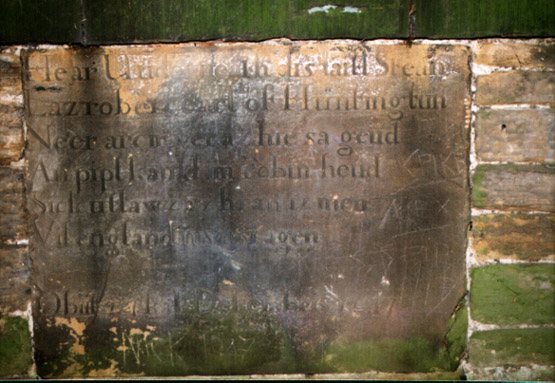
A well-marked grave exists at Kirklees today, surrounded by an iron railing and showing a Victorian era headstone in pseudo-Gothic  English that claims it’s where Robin lies. Suspiciously, it lies a good 600 yards from the gatehouse — over twice the distance of a good medieval longbow shot. However, travelers to the area during the mid-16th century report visiting Robin’s grave in a different place, at about the right distance for a bowshot. And indeed, human remains were found in that spot during renovations of Kirklees Hall during the mid-18th century. It’s unclear wherther those remains were reburied at the spot now marked for Robin.

The Victorian headstone, pictured, reads:

Here underneath dis laitl stean
Laz robert earl of Huntintun
Ne’er arcir ver as hie sa geud
An pipl kauld im robin heud
Sick utlawz as his as iz men
Vil england nivr si agen

Whether Robin lies in the marked grave or not, both locations sit on private land, inaccessible to  the public. Somehow, I think it’s appropriate that Robin remains as elusive to us today as he was to the Sheriff in the 13th century.
Lisasigpink

Next up on the tour:  The village of Harworth

The Lady Well at Headon

Posted by Lisa Hendrix on August 14, 2009
Posted under Locations: Immortal Outlaw, Wanderings

First, two announcements:

  1. I’m signing IMMORTAL OUTLAW tomorrow, Saturday, August 15, at the Barnes & Noble in Medford, OR (4pm). If you’re in the area, bring every live human you can lasso and come for fun, games, and giveaways.
  2. My first ever book video is up on the Books page. Skip over, watch it, and then come back. I’ll wait.

(humming…)

Back?  Good. On to our next stop:

When medieval people located an especially fine or clear spring, they often dedicated it to the Virgin Mary (the Lady). Thus, the lady wells that dot England and Scotland. There are especially famous lady wells in Lewisham (London) and Glasgow.

lady_well

The lady well featured in IMMORTAL OUTLAW lies at the foot of a rise north of Headon, a tiny village in Bassetlaw, the northernmost district of Nottinghamshire. It’s a real well, documented in both the name of a road—Lady Well Lane, which passes by Nether Headon—and on the UK Megaliths website. (Unfortunately, the latter is down as of when I’m writing this. If it comes back online later, I’ll provide a link to the correct page.)

You’ll have to squint at the accompanying thumbnail photos (the larger pictures I intended to include vanished along with the Megaliths site), but you can see that there is indeed a hill behind the well, though I couldn’t find a photo of it, and it wasn’t that clear in Google Earth, either. Not that it would have looked the same as it did at the end of the 13th century anyway. Thus, my supposition of a boulder and a snag on top that could have made a stag’s head is, well, supposition. Imagination. Licentia poetica. I do make my living writing fiction…

headonwelldress2000closerjpg

The lady well was ‘dressed’ in 2000,  i.e. enclosed by the fancy new brick surround you can see at the right (squint again), continuing a tradition of enclosing such wells to preserve them and to honor the Lady.

Although Headon manor was listed in the Domesday book as Hedune, it’s difficult to find any historical information about it. Or any current information, for that matter. However, you can find a set of photos of the area, HERE, including a picture of the manor (much later construction) and the 12th & 14th c St. Peter’s Church, the chapel in which Cwen knelt for hours to avoid Ari, and the manor. You’ll notice the square Norman tower, almost identical to the one on the church in Maltby. The top left photo of the set, the one titled “Headon from Nether Headon,” would have been taken from almost exactly the same spot where Marian told Steinarr she would meet his conditions for aid.

NEXT STOP: A bit about the nuns of Kirklees

Lisasigpink

Switch to Day Switch to Night