Lisa Hendrix

Myth. Magic. And the power of love.

Morning Coffee

Posted by Lisa Hendrix on February 3, 2010
Posted under Life Life, Muse, Writing Life

Look what my barrista made me to drink while I write my next Immortal Brotherhood romance…

That’s a Bella Tazza (espresso, half&half, and ground chocolate).

I’m all aglow.

Cravings

Posted by Lisa Hendrix on February 1, 2010
Posted under Contest, Friends and Visitors, My Heroes

My dear friend Lucy Monroe, one of the most generous women I know, has a new book out tomorrow, so I wanted to give her some Monday love. Let me tell you, I do crave this book — and that Highlander werewolf! Be sure to check out the contest at the end (below the trailer, which you should also check out):

Moon Craving

Feb 2010 – Berkley Sensation
ISBN-13: 978-0425233047
Children of the Moon Book 2

If it were up to him, Talorc—laird of the Sinclair clan and leader of his werewolf pack— would never marry. But when the king orders that Talorc wed an Englishwoman, the lone wolf is shocked to find his mate in the strong-willed Abigail. And after an intensely climactic wedding night, the two fiercely independent souls sense an unbreakable bond…

Deaf since childhood, Abigail hopes to keep her affliction from Talorc as long as possible. And for his part, he has no intention of telling her about being a werewolf. But when Abigail learns that the husband she’s begun to love has deceived her, it will take all of his warrior’s strength—and his wolf’s cunning—to win his wife back. And Talorc will have to face his biggest challenge yet: the vulnerability of a man in love…

Read an Excerpt | Buy the Book

Watch the Book Trailer

As a special thank you to readers, Lucy is giving away a prize pack of pamper yourself products and paranormal romance. All you have to do to enter is send an email with Moon Craving Contest in the subject line to moon_craving at yahoo dot com before February 28th, 2010. The drawing will be held March 1st and the winner will be announced on her blog at http://www.lucymonroeblog.blogspot.com.

Hokenall

Posted by Lisa Hendrix on January 23, 2010
Posted under Locations: Immortal Outlaw

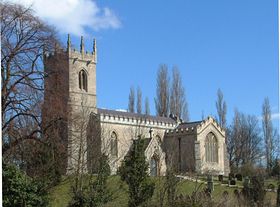
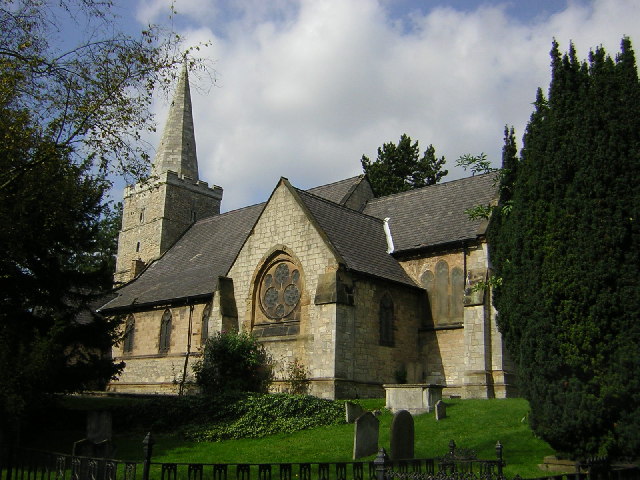
Hokenall, the village where Marian finds her old friend Nichola de Markham, lies in the Leen Valley about seven miles Northwest of Nottingham City. It’s an ancient settlement, with a church built to St. Mary Magdalene in the Saxon era (added to in late 12th century, restored 1874), and at the time of Steinarr and Marian’s visit would have been home to perhaps 2-300 people.

Today the town of about 30,000 is a bedroom community for Nottingham known simply as Hucknall, but from 1295 to 1919, it was called Hucknall Torkard, after a family of wealthy landowners in the area. The first of the family, Geoffrey Torcard (or Gaufr Torcaz, late 12th c) was a patron of nearby Newstead Abbey and gave the monks 120 acres of land from his holdings. Ties remained strong between village and abbey through the centuries until the dissolution.

Unfortunately, even with the obsessive record-preservation habits of the Brits, documents mentioning the Torcards of Hokenall are thin and dribble off to nothing just after 1300, so I got to make up Lord Peter and Lady Nichola from whole cloth. Nichola’s vision problems come out of musings on what my nearsighted, half-blind life would be like without glasses and contacts. Good light–in short supply in England during winter–would be critical. Thus her glass window, a loving and practical gift from her husband. Such a glass window in a private home would still have been rare in the late 13th century, so it’s logical that King Edward and Lord David would fix on it to use as a clue in the quest.

For hundreds of years, Hucknall was a center for framework knitting of stockings. The frame was invented in 1559 in a neighboring village (Calverton) and men from Hokenall joined the Luddite riots that started in Arnold, just 4 miles southeast, in 1811. Two were arrested and sentenced to deportation to Tasmania. Despite the Luddite’s efforts, stocking knitting gradually faded away during the first half of the 19th c. The village turned to glove-making, then to the knitting of shawls, falls, and antimacassars, but nothing fully replaced the hosiery trade until coal was discovered in the Leen Valley in the 1860s.

There are several theories about the roots of the name Hucknall, which appears in the names of several nearby villages including Huthwaite (formerly Hucknall-under-Huthwaite) and Ault-Hucknall. It may have evolved from “nook of the Hōcanere” a tribe whose name appears elsewhere in England, or it may be the Anglo-Saxon “Occa’s Knoll” (knoll meaning place) or “Oak-en-Hall” (place of the oak). The last seems especially fitting, since the area was notorious for the rank, growth of oaks that made the road and tracks nearly impassable.

As the final resting place of George, Lord Byron, and his daughter, the Church of St. Mary Magdalene in Hucknall is a mecca for literary pilgrims. Byron, of course, famously made his home at Newstead Abbey, our next stop.

You can find out more about Hucknall, the Torcard family, and the Luddites at hucknall-torkard.com and at Nottingham History.

Next up: Newstead Abbey and Friar Tuck

Tuxford and the windmill

Posted by Lisa Hendrix on January 15, 2010
Posted under Locations: Immortal Outlaw

Tuxford, the village where Steinarr moved the giant egg to find the next clue, is an ancient village situated along the Great Northern Road (A-1) in Nottinghamshire. In the past, it’s was called Tuxford in the Clays, Tuckers Ford, and in the Domesday Book, Tuxfarne.

When I first wrote chose Tuxford, I didn’t know much more about it than its location, and I made up a windmill based on the slight elevation there. Imagine my pleasure when I was not only able to confirm the existence of a modern windmill in the town (built in 1820), but discovered that you can actually see the windmill and the shadow of its blades in the Google map I marked up! (click it over to satellite view and zoom way in on the Tuxford pin)

Windmills were introduced into England by the Normans during the 11th and 12th centuries. The early mills were all post mills, meaning the entire mill was built around a single post, and the whole structure was rotated to face the blades into the wind. Starting in about 1300, new technology was introduced with the tower mill, in which only the cap of the tower has to be turned to face the blades properly. This construction, though more challenging, provides great savings in the effort required to turn the blades and gives the miller a lot more storage. According to Wikipedia, tower mills provided around 25% of the industrial power before the advent of the steam engine and coal power in the six centuries from 1300-1900.

Have you ever wondered why windmills almost always have an even number of blades?  It’s simple: redundancy.  If you have a 4-blade mill and a blade breaks or a sail tears, you can still run the mill with 2 blades, although at only about 60% power.  If you have a 6-blade mill, it will work with 4 blades, 3 blades or even just 2 blades, so long as you can keep the forces balanced.  On the other hand, break a blade on a 3-blade mill or a 5 blade mill, and you’re out of business. Trying to operate the mill unbalanced will literally tear it apart.

Next up: Hokenall

Keeping busy

Posted by Lisa Hendrix on January 14, 2010
Posted under Wanderings

I’m tapping away furiously on Immortal Champion, so this is a quickie I’ve been saving for a fill-in.

Do you like bubble wrap? Popping it, I mean. Most people find it hypnotically addictive. In fact, given a sheet of bubble wrap and any environment outside a library or hospital Quiet Zone, most people will keep going till they pop every bubble, turning it from useful packing material into trash.

And thus I bring you what may be the ultimate online time-waster (courtesy Child2).  Pop. Pop. Honestly, if you’ve got little kids to keep happy during a wait, this is da bomb. Plug in some headphones and put them to work — if you can give it up yourself…

I’ll get you to Tuxford in a couple of days. And yes, I’m writing, not popping bubbles. Really.

Okay, maybe a few…

Save money this year

Posted by Lisa Hendrix on January 5, 2010
Posted under Life Life, Shopping, Wanderings

No, I’m not becoming one of those bloggers, but I found this wonderful post on The Best Times to Buy Anything, All Year Round at Lifehacker and figured everyone could use the info.

The Wise Men of Gotham

Posted by Lisa Hendrix on January 3, 2010
Posted under Locations: Immortal Outlaw
Photo credit: Asterion

Photo credit: Asterion

Gotham (pronounced GOAT-um — not that I ever hear it that way in my head)  lies about 7 miles south of Nottingham. It became famous when King John came to town.

Some stories say John intended to build a hunting lodge nearby, others that he meant to build a royal highway through the town, some that he merely intended to visit on progress. In any event, the village would be expect to support and maintain the king and his property, a huge burden for such a tiny village. Fortunately, someone had an idea…

Everywhere the king’s advance men went, they saw men playing the fool. Some tried to fence the cuckoo in by holding hands around the bush so that summer would never end (the tale Marian tells Steinarr in IMMORTAL OUTLAW),  others tried to kill an eel in the town pond by drowning it; yet others burned down an entire house to get rid of a wasp’s nest in the thatch. One man, headed home with a sack of meal, threw it over his own shoulder to spare his horse — but didn’t bother to dismount. When twelve men of Gotham went fishing, the man assigned to count them up afterward neglected to count himself, making the number eleven, so that they were all sure one of them had drowned.  (The full stories and more can be found here.)

On hearing these stories, John, fearing the Read the rest of this entry »

Twenty-ten

Posted by Lisa Hendrix on January 1, 2010
Posted under Life Life

Happy New Year

Each new year comes at us encumbered by advice on goal-setting and list after list of resolutions just aching to be broken. Instead of adding to the burden, I give you these hopes:

That you say yes more often; that you open your mind to something new every day; that at least once during the year you make time to sit in a swing and spin until you’re dizzy; that you learn to believe the compliments people give you; that someone who loves you knits you something by hand; that you have more color in your life; that you smile more; that a child hugs you with reckless abandon; that you love.

Welcome 2010.

The Blidworth Stone

Posted by Lisa Hendrix on December 29, 2009
Posted under Locations: Immortal Outlaw

The earl of Huntingdon said the stone at Blidworth, a 14′ high natural outcropping known today as the Druid Stone, looked like a woman’s <ahem> quaint. Steinarr, Torvald, and even Marian agreed.  How about you?

druid stone

The clue would have been buried on the far side, above the smaller opening. Picture Steinarr squeezing through there…

UPDATE (12/30/09):  I neglected to mention that the Church of St. Mary of the Purification in Blidworth town is the location of an unmarked grave reputed to be that of Will Scarlet (my William Scathelocke). The site, just inside the iron gate, is marked by stones from the old church spire, but since Will was outlaw, it’s unlikely he would have been buried in hallowed ground. There are, however, graves on the hill behind the church, within the bounds of Sherwood Forest, one of which could well be Will’s. Blidworth also tries to claim Marian lived there, but we all know that’s not true. <g>

See pictures of the old church, Will’s reputed grave, and other Blidworth sites at Robin Hood was Here. If you turn on your sound, you’ll also get to hear Roger Williams sing Oo de lally, from Disney’s Robin Hood.

Next up (after New Years): The Wise Men of Gotham

Merry Christmas

Posted by Lisa Hendrix on December 25, 2009
Posted under Wanderings

medieval-merry-christmas

Switch to Day Switch to Night